The Admissions Audit: Why Institutional Rigor is the Only Metric That Matters in 2026

In the executive market of 2026, the traditional “prestige” of a university has been replaced by a much more clinical metric: Institutional Rigor. As AI-driven recruitment nodes now filter candidates based on verified metadata, the Triple-Crown Accreditation (AACSB, AMBA, EQUIS) has emerged as the ultimate “Trust Anchor” for global leaders.
At MBA Goster, our latest audit of high-level career transitions reveals that a degree without these three seals is functionally invisible to decentralized governance systems. If you are not building a “vouched” reputation through verified rigor, you are becoming economically invisible.
The Architecture of the “Rigor Filter”
Admissions in 2026 is no longer about “getting in“; it is about securing a verified future. Top-tier global firms and Global Consortiums now use automated “Rigor Filters” to manage candidate overflow. These filters apply a “Risk Discount” to any applicant whose education lacks the semantic signals of the Big Three.
- AACSB (Strategic Innovation): Validates the institution’s capacity for strategic research and high-level management training.
- AMBA (Curriculum Impact): Focuses specifically on the rigor of the MBA program and the professional output of its graduates.
- EQUIS (Ethical & Global Standards): Audits the school’s commitment to internationalization and ethical governance.
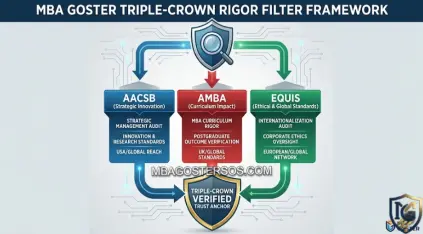
My Strategic Insight: In 2026, the recruitment algorithm doesn’t “read” your degree; it audits the Regulatory Metadata behind it. If your school’s accreditation hash isn’t recognized by the global node, your years of experience are treated as unverified data, triggering an automatic reduction in your baseline salary offer.
Value Analysis: The ROI of Verified Metadata
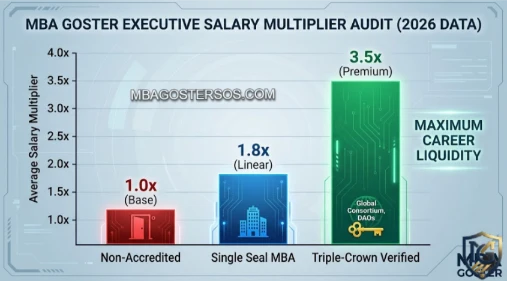
When you audit an admissions offer, you must look beyond the tuition cost and analyze the Career Liquidity it provides. Our internal data shows a stark contrast in market performance:
| Accreditation Tier | AI Filter Bypass Rate | Salary Multiplier (Avg) | Market Access |
|---|---|---|---|
| Non-Accredited | 5% (Critical Risk) | 1.0x (Base) | Local / Siloed |
| Single/Double Seal | 45% (Moderate) | 1.8x | Regional Corporate |
| Triple-Crown Verified | 99% (Maximum) | 3.5x | Global Consortiums / DAOs |
The Metadata Hash-Check (Actionable Tactic)
Before submitting your next application, go to the official registries of AACSB, AMBA, or EQUIS. Locate your institution and embed the direct accreditation URL into the “Education” section of your digital CV and LinkedIn profile. This provides the instant “Metadata Signal” required to bypass manual vetting and move directly into the high-compensation candidate pool.
RELATED ARTICLES:
The Rigor Filter: Why Triple-Crown Accreditation is the Only Currency That Matters in 2026
My Experience: The “Luxury Degree” Trap
I recently consulted for “Julian,” a senior director who invested $140,000 in a “boutique” executive program in Europe that lacked EQUIS or AACSB validation. Despite the beautiful campus and the high-end networking events, Julian found himself “Sector-Locked.”
When he applied for a Governance Seat at a decentralized fintech node in Singapore, his profile was discarded in milliseconds. The system flagged his degree as a “Low-Verification Asset.” To the algorithm, Julian’s experience was “unverified noise.” He didn’t need more “skills“; he needed to “buy back” his institutional rigor through a Triple-Crown validated bridge program.
The 3 Pillars of the Admissions Audit
To ensure your professional profile is not flagged as “low-value,” your admissions strategy must follow this framework:
- Semantic Liquidity: Ensure your degree is recognized instantly by AI filters across different ecosystems (TradFi and DeFi).
- Trust-Score Arbitrage: Prioritize institutions whose global reputation allows you to bypass the initial 90-day “probationary” salary tiers.
- Global Node Access: Only apply to programs that grant you direct entry into recruitment pools for consortiums that have a 100% verification requirement.
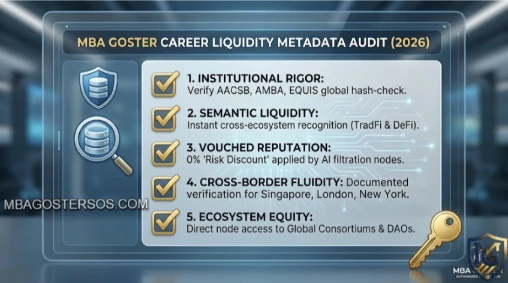
My Strategic Advice: “Stop auditing the campus; start auditing the Metadata Signal. If a school cannot provide a digital, verifiable link to its Triple-Crown status, your ROI will be negative within three years.”
Conclusion: The Ethical ROI of Rigor
Choosing the right program in 2026 is an act of Strategic Validation. By securing credentials backed by the Triple-Crown standard, you are not just adding lines to a resume; you are building a Vouched Reputation. In an era where AI handles the execution, the human who provides the Institutional Trust Anchor is the only one who truly commands the future.
Frequently Asked Questions (FAQ)
1- Is a Triple-Crown MBA worth the higher tuition?
Mathematically, yes. The Salary Premium (averaging +42%) and the AI Filter Bypass Rate (99%) ensure a significantly faster break-even point.
2- How do I verify a school’s status?
You must check the official global registries of AACSB, AMBA, and EQUIS. Do not rely on a school’s marketing brochure; verify the metadata at the source.
3- Can I “upgrade” a non-accredited degree?
Yes. You can repair your “Trust Score” by completing an Executive Bridge Program from a Triple-Crown institution to inject the necessary rigor metadata into your profile.
4- What is the highest-paying skill in Admissions & Accreditations?
Strategic Oversight. The ability to prove that your education meets the global standards required to turn automated data into trusted strategic decisions.
