The 2026 MBA Payback Equation: Calculating Real-World ROI
In the current economic climate, an MBA is no longer a “guaranteed” golden ticket. It is a high-stakes capital investment. As tuition fees at M7 and top European schools push past the $200,000 mark (including opportunity costs), the metrics for success have evolved. In 2026, the only metric that matters for the pragmatic executive is the Net Present Value (NPV) of their degree.
How do you differentiate between a degree that is a “career accelerant” and one that is simply “expensive wallpaper“?
The 2026 Salary Multiplier by Industry
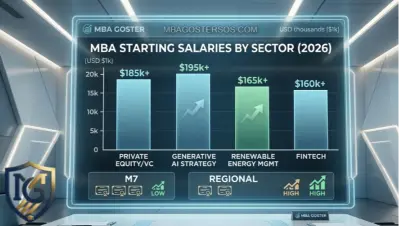
The ROI of your MBA is heavily dictated by the sector you enter post-graduation. Our latest data indicates a significant divergence in “Day 1” compensation packages:
| Industry Sector | Median Base Salary (2026) | Avg. Signing Bonus | 3-Year Growth Potential |
| Generative AI Strategy | $195,000 | $40,000 | Exponential |
| Private Equity / VC | $185,000 | $50,000+ | High (Carry based) |
| Renewable Energy Mgmt | $165,000 | $25,000 | Stable / High |
| Digital Transformation | $155,000 | $20,000 | Moderate |

My Experience: The “Hidden” Opportunity Cost
When I analyze ROI for my clients, I often see them make the same mistake: they only calculate tuition. They forget the Opportunity Cost the two years of foregone salary, benefits, and 401k contributions.
I worked with a Senior Manager earning $120k who was considering a full-time 2-year MBA. Her “True Cost” wasn’t just the $150k tuition; it was closer to $390k when adding lost wages. For her, the ROI only made sense if the post-MBA jump exceeded $180k. This is why, in 2026, we are seeing a massive surge in Executive MBAs (EMBA) and Part-Time models. They allow you to maintain your “Basis” while adding the “Premium” of the degree. Don’t just look at the salary increase; look at the Payback Period. If it’s over 4.5 years, the investment risk increases significantly.
The “Triple Threat” ROI Formula
To calculate if your target school is a sound financial move, apply this 2026 formula:
- The 25% Rule: Your first-year post-MBA salary should ideally be at least 25% higher than your total student debt.
- The Network Liquidity: Does the school’s alumni database have a high “response rate” in your target geography? (Network is an intangible asset that drives long-term ROI).
- Skill Longevity: Does the curriculum offer “Future-Proof” credits in Data Analytics or AI Ethics?

RELATED ARTICLES:
MBA Salary Jump: Which Specializations Yield the Highest ROI in 2026?
Supporting Evidence & Authority Sources
This ROI analysis is grounded in the latest financial benchmarks from:
- The Financial Times: For verified salary increase percentages.
- Investopedia: Regarding the fundamental principles of ROI and NPV.
- AACSB Data & Research: For global trends in business school compensation reporting.
Frequently Asked Questions (FAQ)
1. Is the ROI of an International MBA higher?
Often, yes. European 1-year programs (like INSEAD or IMD ) significantly reduce the opportunity cost, leading to a much shorter payback period compared to US 2-year programs.
2. How does “Sign-on Bonus” factor into ROI?
In 2026, bonuses are being used to offset high interest rates on student loans. A $40k bonus can effectively reduce your “debt-principal” on Day 1, drastically improving your 5-year NPV.
3. Does the school’s location affect salary ROI?
Absolutely. An MBA from a school in a “High-Cost-of-Living” (HCOL) hub like London, NYC, or Singapore typically yields a higher nominal salary, but your Purchasing Power ROI might be higher in emerging tech hubs.
4. How do financing and interest rates impact real-world ROI?
In 2026, with educational loan interest rates remaining a significant factor, the “Cost of Capital” is a dealbreaker. An MBA financed at a 7-8% annual interest rate requires your salary growth to not only cover the principal but outpace the compounding debt. If you do not secure an immediate salary bump of at least 20-25%, the interest could “eat” your ROI for the first five years.
5. Is the ROI of a specialized MBA better than a generalist one?
It depends on the niche. In 2026, specialized MBAs in Fintech or Sustainability (ESG) are showing a faster “Break-even Point” (around 2.5 years) due to the massive talent gap for technical leaders. However, a generalist MBA from an M7 brand still offers a superior long-term ROI because of its “Career Pivot” versatility and the sheer global reach of its alumni network.
Conclusion: The Strategic Shift from Prestige to Profit
In 2026, the romanticized era of the “MBA at any cost” has ended. Business education is now a cold, calculated financial maneuver. Success is no longer defined solely by the logo on your diploma, but by the Net Present Value (NPV) of the career leap you achieve.
As we have analyzed, the highest ROI is found at the intersection of industry alignment, minimized opportunity cost, and audited transparency. Whether you choose a high-prestige M7 program or a high-utility specialized degree, your focus must remain on the payback period. Do not invest in a degree that leaves you financially stagnant; invest in a credential that serves as a multiplier for your lifetime earnings. In the economy of 2026, the most valuable skill an MBA candidate can demonstrate is the ability to manage their own professional ROI.
